Tarboush Morocco Tours

Artisan Trails & Jewish Heritage
star4.8(120 reviews)
|schedule5 Days / 4 Nights|From $1,500
FitnessAll fitness levels welcome
Group size4-10 people (intimate cultural group)
Best seasonMarch-May, September-November
Departs fromYour hotel/riad in Marrakech or Casablanca
+1

Overview

Most Morocco tours show you the surface. This one goes deeper.

Morocco has one of the world's oldest Jewish communities — 2,000+ years of history that most tourists walk right past. This tour connects the dots: ancient synagogues, artisan workshops where Jewish and Muslim craftsmen worked side by side for centuries, and cultural traditions that shaped this country in ways that rarely make the guidebooks.

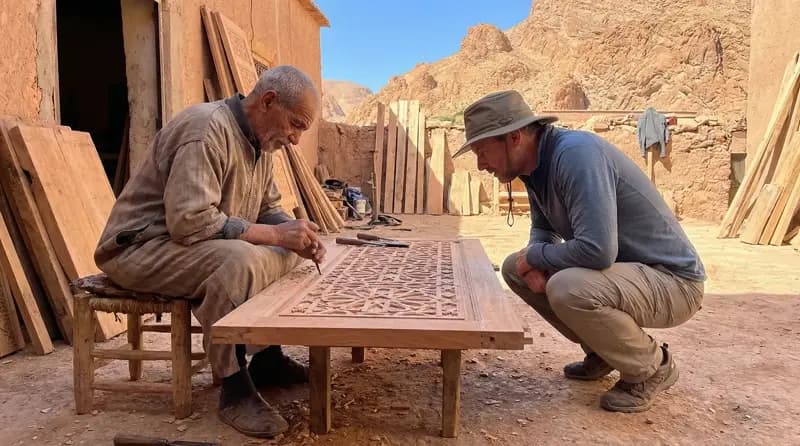
The artisan trails run parallel to the heritage story — Morocco's craft traditions (zellige tiles, Fes ceramics, cedar woodcarving, silk weaving) were developed and refined in the same medinas where the Mellah quarters stood. Understanding one illuminates the other.

This is the tour for travelers who want to bring something home that isn't sold in a souvenir shop.


How this tour is different

Heritage tours in Morocco tend to be cursory — a brief stop at a synagogue, a photo of a tannery, a carpet shop visit that feels obligatory. This one is built differently:

  • The only tour that connects Jewish heritage with the artisan tradition — the Mellah craftsmen and the medina workshops share a history most tours never mention
  • Ibn Danan Synagogue with a guide who knows its full story — not a placard, but a 90-minute guided visit that makes clear why this building survived when others didn't
  • Working artisan workshops, not showrooms — craftsmen making pieces on commission for Moroccan buyers, not for export
  • Private meeting with community members where possible — a conversation that no organized tour can guarantee or manufacture

Is this trip right for you?

Perfect if: You have Jewish heritage and want to experience Morocco's role in that history. Or you're simply someone who finds the intersection of culture, craft, and coexistence more interesting than scenic drives. This tour rewards intellectual curiosity.

Also great for: History teachers, museum professionals, heritage travelers from the US and Canada, and anyone who wants a Morocco experience that isn't primarily visual. Fitness level: easy — city walking, mostly flat medina streets.

Not ideal if: You want beach, desert, or mountain adventure. This tour is deliberately urban and cultural — the reward is knowledge and connection, not landscape.

boltWhat makes this tour special

  • check_circleIbn Danan Synagogue in Fes — the best-preserved Jewish religious site in Morocco
  • check_circleMarrakech Mellah quarter (1558) — 500 years of Jewish-Moroccan history in the architecture
  • check_circleWorking artisan workshops not on the tourist circuit — craftsmen making for the domestic market
  • check_circleZellige tile master demonstration — techniques unchanged since the 14th century
  • check_circleJewish cemetery of Fes — family tombs spanning five centuries of continuous community
  • check_circlePrivate guide with deep knowledge of both Moroccan Jewish history and craft traditions
  • check_circleSmall group max 10 — access to spaces that large tour groups cannot enter

Route Map

Loading map...

Itinerary

Marrakech's artisan quarter is the most concentrated demonstration of traditional craft in Morocco: gold-beaters, leatherworkers, ceramic painters, and zellige tile cutters — each in their specific quarter, each using techniques that predate the city itself. Your guide's access here goes beyond the tourist version: into the workshops where apprentices learn, the back rooms where the master pieces are stored, the conversations that require someone who grew up understanding both worlds.

  • check_circle

    Access to working artisan workshops beyond the tourist circuit

  • check_circle

    Zellige tile workshop demonstration by a master craftsman

  • check_circle

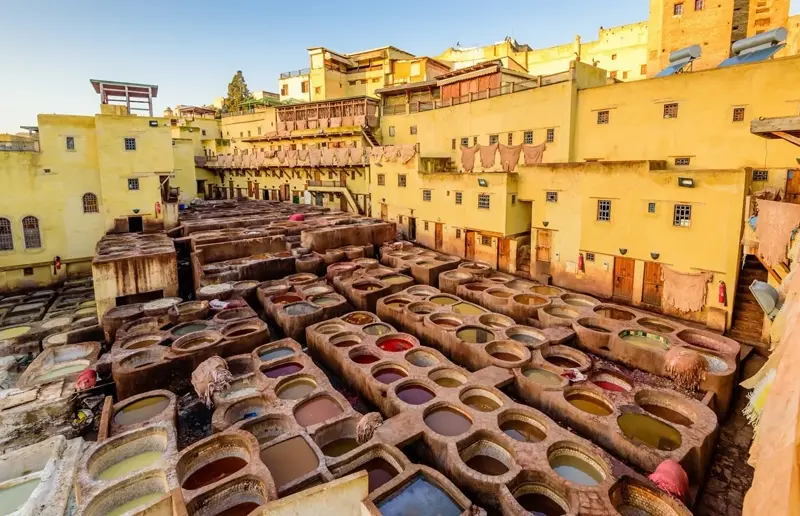
    Traditional leather tannery viewed from the privileged angle

  • check_circle

    Afternoon at a leather atelier with customization options

The Mellah district of Marrakech's medina is the oldest Jewish quarter in Morocco, established in 1558, and its traces are still readable in the architecture, the synagogues, and the market that continues in buildings occupied for four centuries. The Simon Attias Synagogue is one of three remaining active synagogues in the medina, and your private guide provides the context of the Jewish community that built, lived in, and largely left this quarter over the 20th century.

  • check_circle

    Simon Attias Synagogue — one of three active synagogues still in the medina

  • check_circle

    Mellah marketplace in the historic Jewish commercial quarter

  • check_circle

    Museum of Moroccan Judaism and its remarkable photographic archive

  • check_circle

    The architectural record of four centuries of Jewish-Moroccan life

Fes is Morocco's artisan capital in the same way it's Morocco's scholarly capital: by tradition, by concentration, and by the intensity with which the craft has been preserved. The carpet weavers of Fes follow patterns specific to neighborhoods and families, identifiable as a signature. The copper craftsmen produce their goods on commission for the royal palaces, and the cedar woodcarvers work using techniques documented in 14th-century manuals.

  • check_circle

    Fes carpet weaving — the family signature patterns and their meaning

  • check_circle

    Royal copper craftsmen working on commission pieces

  • check_circle

    Cedar woodcarving workshop using seven-hundred-year-old technique

  • check_circle

    Leather souk where the product is bought by Fes families, not tourists

The Mellah of Fes is the original Moroccan Jewish quarter — established in 1438, larger and older than Marrakech's, and containing within its narrow streets a complete record of 600 years of Jewish-Berber-Arab coexistence. The Ibn Danan synagogue, restored to something close to its original condition, is one of the most moving religious buildings in Morocco regardless of your own tradition. The Jewish cemetery adjacent to the medina, with its whitewashed tombs arranged by family, is a remarkably intact historical document.

  • check_circle

    Ibn Danan Synagogue — the best-preserved Jewish religious site in Morocco

  • check_circle

    Jewish cemetery of Fes with family tombs across five centuries

  • check_circle

    Mellah marketplace where the stalls still occupy their historical positions

  • check_circle

    The layered story of coexistence written in the architecture itself

Meknes wears its imperial ambition in every gate and granary: the Bab Mansour, one of the most theatrical doorways in North Africa, opens onto a medina that feels genuinely lived-in rather than curated for tourism. The heri es-Souani granaries and stables, built for an army of 12,000 horses, are so oversized as to constitute a statement rather than a practical installation. The return to Marrakech closes the artisan and heritage circuit with the weight of five full days of discovery.

  • check_circle

    Bab Mansour — the most ornate imperial gateway in the Islamic world

  • check_circle

    Heri es-Souani granaries — the scale of Moulay Ismail's ambition

  • check_circle

    Final Moroccan lunch in the authentic Meknes medina

  • check_circle

    Return through the Atlantic plains to Marrakech

What's Included

  • check_circleAll transportation
  • check_circleEnglish-speaking artisan-focused guide
  • check_circleAccess to workshops & cooperatives
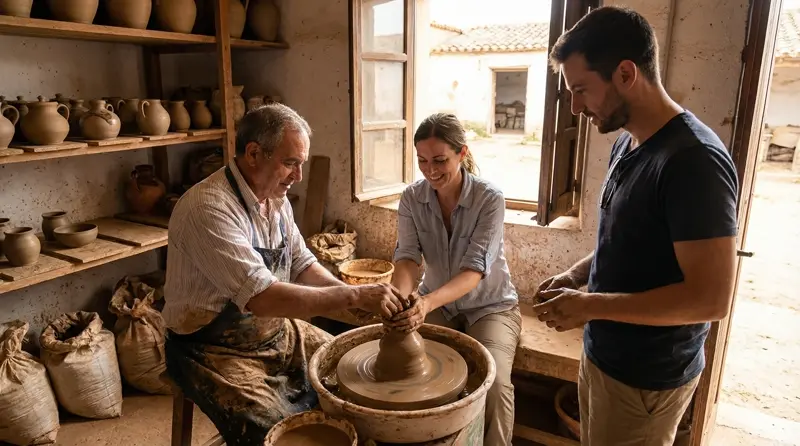
  • check_circleHands-on experiences (pottery, weaving, etc.)
  • check_circleMeals (breakfast daily, some lunches)
  • check_circleAccommodations (4 nights, riads/hotels)
  • check_circleGuide expertise (history, techniques, fair pricing)
  • check_circleDirect artisan connections

Not Included

  • cancelPurchases (you pay artisans directly)
  • cancelShipping/exports (arrange separately)
  • cancelMeals not mentioned
  • cancelTips & gratuities
  • cancelTravel insurance

Traveler Reviews

R

Rabbi David & Michelle C.

Philadelphia, PA, USA

As a Jewish-American family, this tour was deeply meaningful. Seeing the well-preserved synagogues and learning about Morocco's centuries of Jewish-Muslim coexistence was profoundly moving. The artisan workshops were a wonderful bonus.

S

Stephanie G.

Los Angeles, CA, USA

I'm not Jewish but found this tour fascinating. The multicultural history of Morocco came alive through the heritage sites and the incredible artisan workshops. Buying directly from a 4th-generation tile maker was unforgettable.

M

Michael T., New York

Solo, May 2025

I thought I knew Morocco's history. This tour showed me it's much more complex and interesting. The artisan traditions, the Jewish heritage—rarely discussed but incredibly important.

S

Sarah L., Boston

Solo, June 2025

Buying directly from craftspeople instead of through middlemen. Knowing money actually helps families. That's tourism done right.

J

Jennifer & Tom P., Seattle

Couple, April 2025

Our guide was thoughtful about discussing difficult history respectfully. Not exploitative, not performative—just honest.

helpFrequently Asked Questions

Is this tour appropriate for non-Jewish travelers?expand_more
Absolutely! This tour is designed for anyone interested in Morocco's rich multicultural history. The Jewish heritage sites are part of Morocco's broader cultural tapestry and appreciated by travelers of all backgrounds.
Will we visit active synagogues?expand_more
Yes, when available we visit functioning synagogues in cities like Marrakech and Fes. Respectful attire is required (men may need head coverings, provided on-site).
What artisan workshops will we see?expand_more
You'll visit traditional tanneries, pottery workshops, zellige tilework studios, and textile weavers. Each workshop offers hands-on demonstrations and the opportunity to purchase directly from artisans.
How much walking is involved?expand_more
Expect 2-3 miles daily on uneven medina surfaces. The pace is relaxed with frequent stops at workshops and heritage sites.
Can we buy directly from artisans?expand_more
Yes! One of the highlights is purchasing handcrafted goods directly from the artisans who made them — ensuring fair prices and supporting local families.

Starting Price

1,500/ person
2
Total Estimate$3000
check_circleNo payment required today
chat_bubbleChat With Us
verified
100% Satisfaction GuaranteeRefundable if not satisfied
savingsBest Price
event_availableFree Cancel
support_agent24/7 Support

You Might Also Like

View All arrow_forward